The aerospace and defence industries are at the forefront of Europe’s strategic autonomy, technological advancement, and industrial innovation. According to the ASD 2025 report, the sector employs over 1.2 million people across Europe, with approximately 600,000 directly working in defence and a further 1.2 million jobs supported indirectly throughout the wider economy.
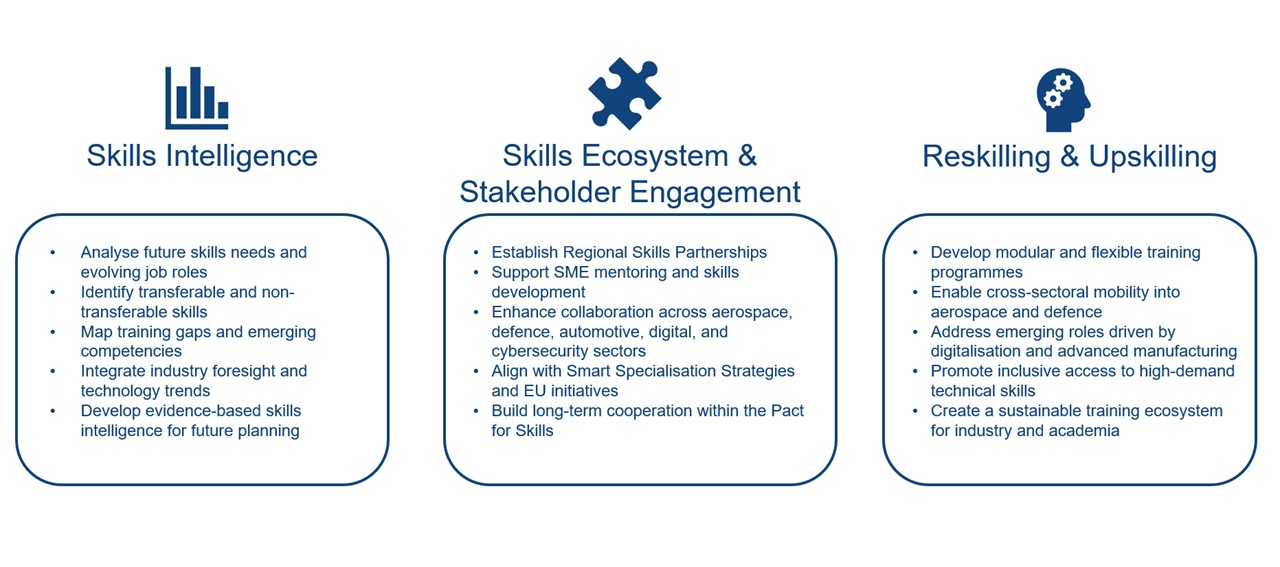
Despite its economic and strategic importance, the sector is facing increasing challenges in attracting and retaining STEM talent, particularly in fields such as engineering, artificial intelligence, cybersecurity, robotics, and digital technologies. Key structural issues include an ageing workforce, persistent skills mismatches between education systems and industry needs, and strong competition for talent from other high-tech sectors. Additional barriers include low sector attractiveness among younger generations, gender imbalance, and difficulties in financing and recruiting within SMEs.
Looking ahead, it is estimated that by 2030 around 30% of defence-related jobs will require new and emerging skill sets. In response, the EU White Paper on Defence (2025) identifies workforce development, upskilling, and talent attraction as critical priorities for the sector. Strengthening education–industry collaboration and promoting pan-European upskilling initiatives will therefore be essential to ensuring Europe’s future defence readiness and sustained innovation capacity.